
Radiofrequency Ablation
An advanced, nonsurgical treatment that uses radiofrequency energy to interrupt pain signals for longer-lasting relief.
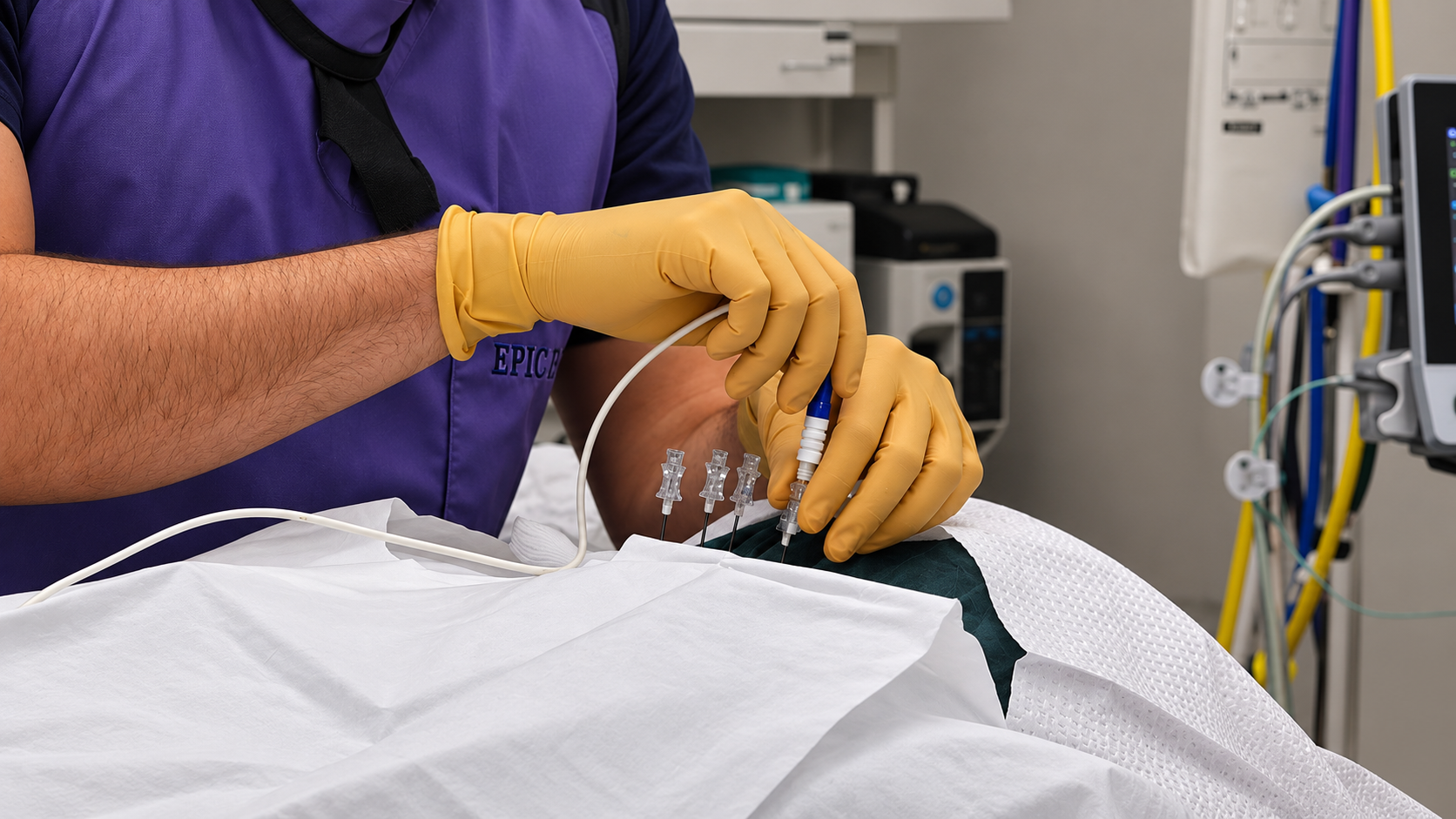
Interrupt Pain at Its Source
Radiofrequency ablation uses controlled heat from radiofrequency energy to disrupt the nerves that carry pain, while sparing the surrounding tissue. There is no surgery, and it is usually done as an outpatient procedure.
It is often recommended after diagnostic injections, like medial branch blocks, confirm where your pain is coming from. Because it targets the nerves themselves, relief often lasts months or longer, and the procedure can be repeated if pain returns.
Who It Can Help
What to Expect
Review
Your specialist reviews the results of your prior diagnostic injections.
Comfort
A local anesthetic keeps you comfortable. General anesthesia is usually not needed.
Probe Placement
Image guidance positions the RFA probe precisely near the target nerves.
Treatment
Controlled radiofrequency energy interrupts the nerves sending pain signals.
Recovery
A short recovery and same-day discharge. Most patients resume normal activity within several days.
Longer Relief Than Injections Alone
Injection Treatments
- Reduce inflammation
- Often provide temporary relief
- Can help confirm a diagnosis
Radiofrequency Ablation
- Disables the nerves causing pain
- Usually offers longer relief
- Treats confirmed joint-related pain
Your provider recommends the right option based on your clinical evaluation, imaging and response to prior treatment.

When You Will Feel Results
Improvement may appear gradually over one to three weeks. Duration varies by person, and many patients enjoy relief lasting months or longer. If pain persists or becomes more complex, spinal cord stimulation may be discussed.
Recovery & Safety
RFA is considered low-risk when performed by trained pain specialists. Temporary soreness or mild stiffness near the treatment site is possible, and serious complications are uncommon. Image guidance supports precision throughout.
Your path to pain relief starts here.
Tell us what you need help with, and our team will contact you to coordinate your visit. We’ll help you find the right location, answer your questions, and confirm appointment availability.